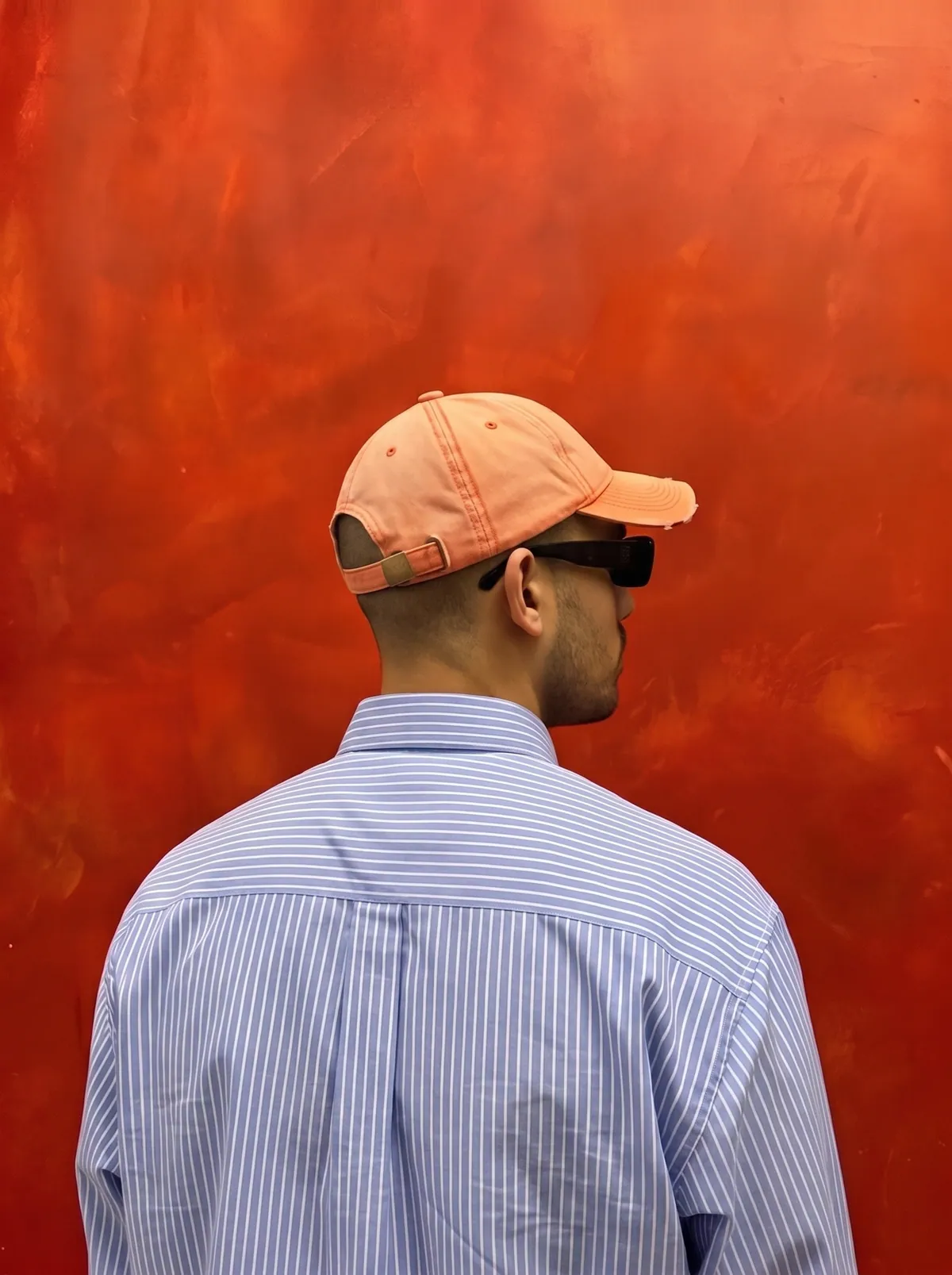
Function decides more than fashion admits
Booth clothes have a job description. Heat: a club booth sits under lights in the warmest corner of the room, so fabric and layers are chosen for a space that starts cold and ends tropical. Movement: five hours of reaching across decks rules out anything that binds at the shoulder. Light: booths live in near-dark punctuated by strobes, which is why silhouettes, caps and strong shapes read from the floor while fine detail vanishes. Most working DJs converge on the same answer — durable pieces with one deliberate signal, a cap, a chain, a colour — because that is what survives the room and still photographs.
Fashion rooms flip the brief
Playing fashion events changes the terms: in those rooms the DJ is part of the visual programme, and the booth outfit is read as closely as the set. The working rule is that you dress with the room, not above it — the brand's codes lead, and the DJ's signal adapts. It is genuinely close to the musical job: read the room's language, then speak it with your own accent. A runway soundtrack and a runway outfit fail the same way, by ignoring the brief in favour of self-expression at the wrong moment.
Style as part of the booking
It is worth saying plainly, because clients rarely ask: how a DJ presents is part of what is being booked. A luxury private floor, a brand activation and a warehouse night have different visual registers, and a professional turns up already speaking the right one. The photographs of an event keep circulating long after the last song — the booth is in most of them.