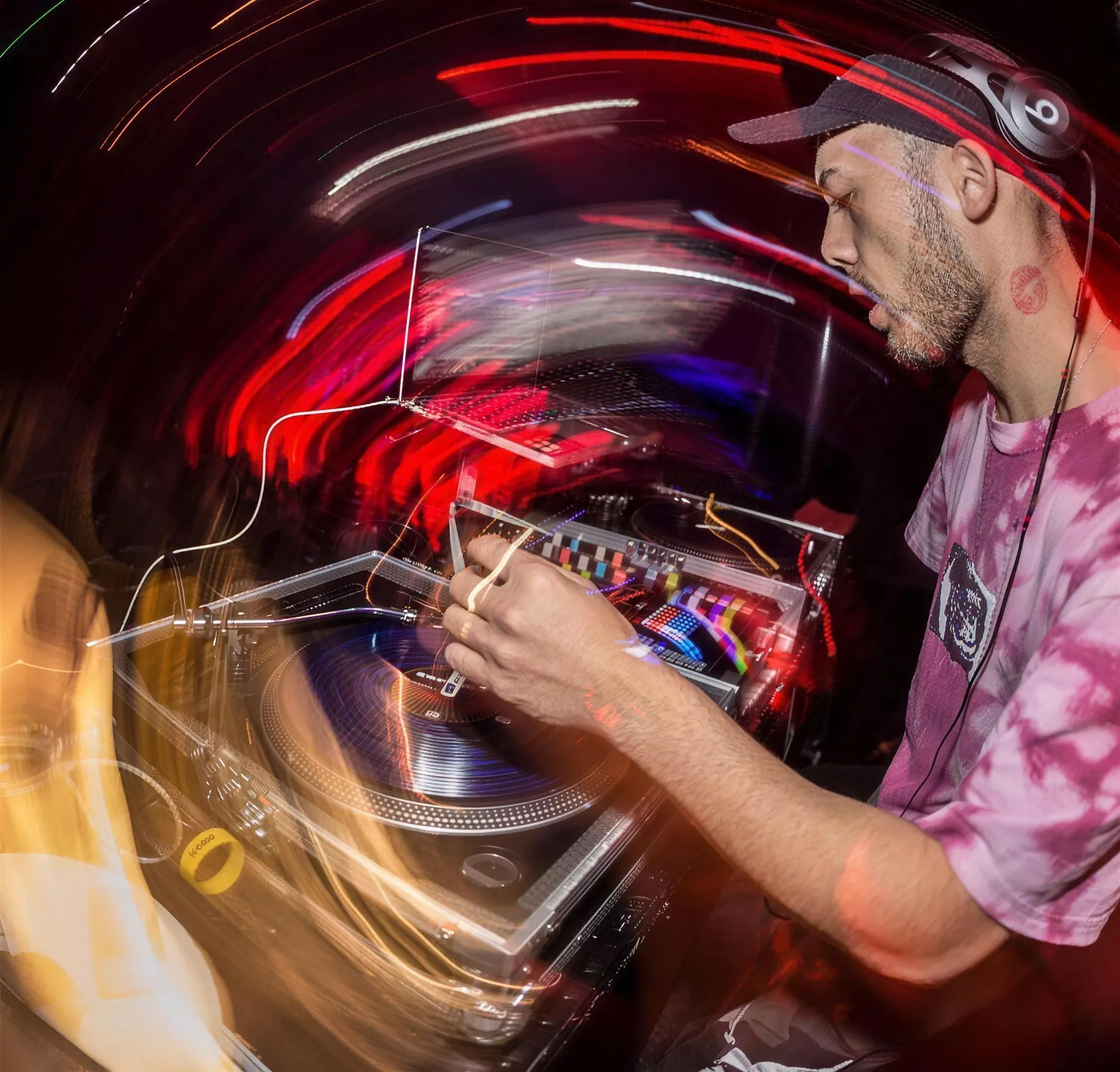
How long is a DJ set? The numbers by event
Club sets run one to three hours per slot — warm-up, peak and close are different crafts, and all-night-long (open to close, one DJ) is its own discipline. Wedding evening receptions typically carry four to six hours of music. Corporate events usually need coverage from doors to carriages with the dance floor concentrated in the last two to three hours. Festival slots run 45 minutes to 90 minutes and are shaped by the bill around them. Brand activations can mean doors-open-to-doors-closed coverage across a full day, planned in arcs with scheduled breathing room.
Why the arc matters more than the hours
A four-hour set is not four one-hour sets in a row. Energy has to be spent like a budget: build too early and the floor is exhausted before the night peaks; hold back too long and it never ignites. When you brief a DJ, the useful information is not just “play for five hours” but where the peak should land and what has to happen around it — speeches, awards, last trains.
One good DJ across the whole night usually beats two or three in relay for private and corporate floors, because the arc lives in one head. Clubs are the exception: a bill of DJs is the format, and handovers done properly are part of the craft.
How long are DJ sets at different venues?
Sets are shaped by the venue’s format. A bar or restaurant DJ may play a rolling three to five hours at a controlled volume. A nightclub resident usually holds a one-to-two-hour slot in a line-up; a headline slot can run longer. A wedding or private party tends to book the DJ for the whole evening, with the set length being the length of the party. Festival and day-party slots are the shortest and most concentrated, because the bill is the product.
The question to ask a venue or planner is not “how long is a set” but “when does the room need to peak, and what is happening either side of that?” Once that is known, the hours fall out of it.
Planning the hours: a quick method
Start from the end: when must the music stop (licence, curfew, last trains)? Work back to when the dance floor should be full, then add a warm-up window before it. Add setup and soundcheck on top — usually an hour before doors for a straightforward venue, longer for outdoor or production-heavy events. That total is the DJ’s booked time, not just the playing time.